Over 2,700 ★★★★★ Reviews – Trusted Family Dentist Near You in Mesquite, Balch Springs and Garland TX

Oral Cancer Screening in Mesquite, Garland & Balch Springs

At Inspire Dental & Orthodontics, oral cancer screenings are included as part of every routine dental exam at no extra cost. Our dentists check the lips, tongue, gums, throat, and soft tissues of the mouth for early warning signs that most patients would never notice on their own. When caught early, oral cancer has a significantly higher survival rate, making a quick yearly screening one of the most important preventive steps you can take for your health. We accept Medicaid, CHIP, and most PPO plans at all three locations.
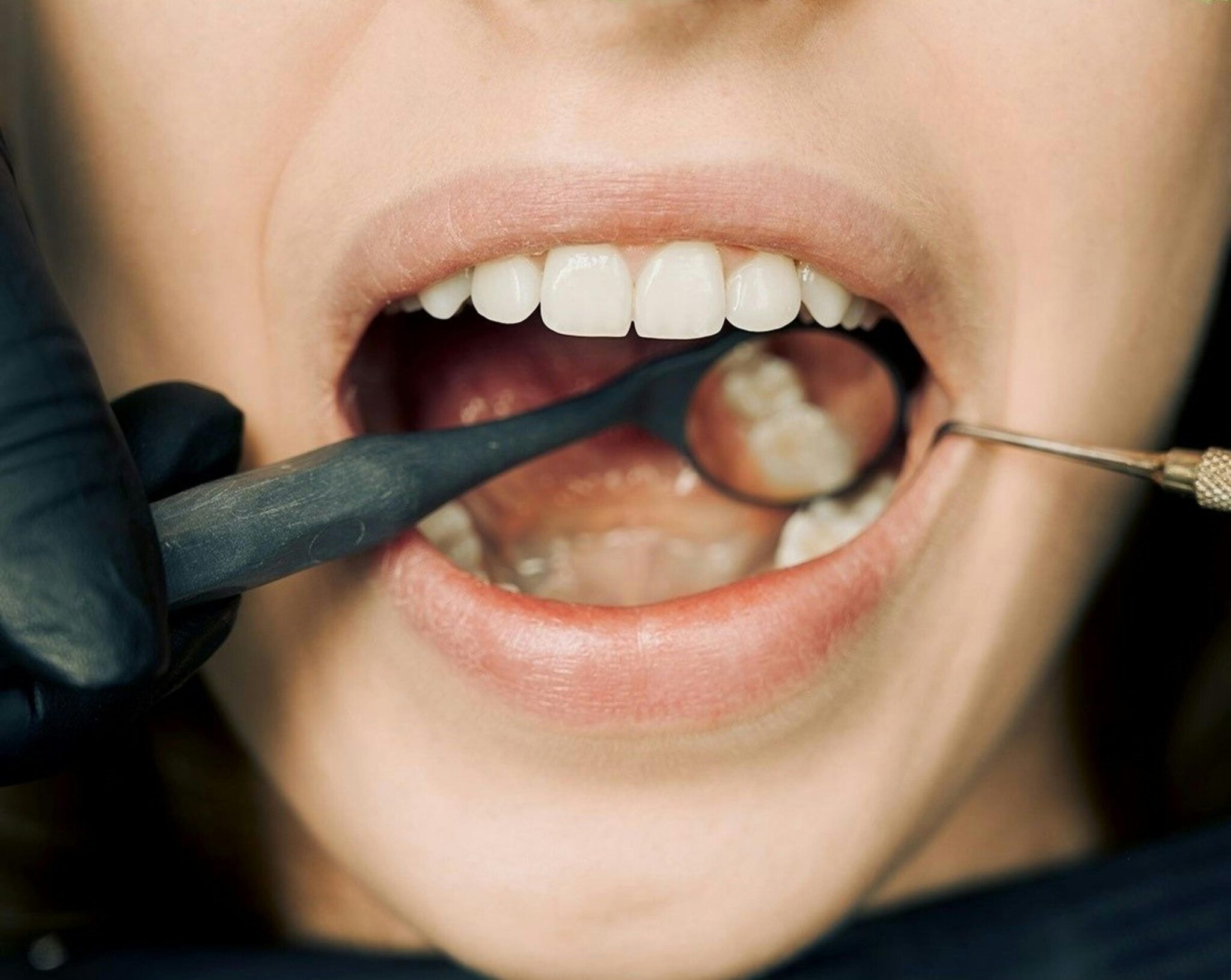
Oral cancer screening at Inspire Dental in Mesquite, Garland, and Balch Springs TX

A Two-Minute Exam That Could Save Your Life

Oral cancer screenings are a quick, painless visual and physical examination of the mouth, lips, tongue, throat, and surrounding soft tissues. The goal is to identify abnormal tissue, sores, or changes that may indicate early-stage oral cancer or pre-cancerous conditions. Because oral cancer often causes no pain in its earliest stages, many cases go undetected until they are more advanced and harder to treat.

At Inspire Dental & Orthodontics, screening is performed as part of every routine dental exam at no additional charge. Our dentists are trained to identify the subtle changes that warrant further evaluation. We serve patients across Mesquite, Garland, and Balch Springs and accept Medicaid, CHIP, and most PPO plans.

Warning Signs to Watch For Between Exams

  • A sore in the mouth that does not heal within two weeks
  • Red or white patches on the tongue, gums, or inner cheeks
  • A lump, thickening, or rough spot inside the mouth or throat
  • Persistent numbness or tenderness in the mouth or lips
  • Difficulty chewing, swallowing, or moving the jaw or tongue
  • A feeling that something is caught in the throat
  • Unexplained bleeding in the mouth not related to brushing
  • Voice changes or hoarseness lasting more than two weeks

Who Is at Higher Risk for Oral Cancer?

Anyone can develop oral cancer, but certain factors increase the likelihood. Patients with one or more of these risk factors should be especially consistent about annual screenings.

Tobacco Use

Smoking cigarettes, cigars, or pipes and using smokeless tobacco are among the strongest risk factors for oral cancer. Risk increases with duration and frequency of use.

Heavy Alcohol Consumption

Alcohol significantly increases oral cancer risk, and the combination of alcohol and tobacco raises risk far more than either does alone.

HPV Infection

Human papillomavirus, particularly HPV type 16, is a leading cause of oropharyngeal cancers affecting the back of the throat, base of the tongue, and tonsils.

Prolonged Sun Exposure

UV exposure increases the risk of lip cancer. People who work outdoors or spend significant time in the sun without lip protection face elevated risk.

Age and Sex

Oral cancer is more common in adults over 40 and affects men at roughly twice the rate of women, though rates in women have been rising in recent decades.

Previous Oral Cancer Diagnosis

Patients who have had oral cancer before are at significantly higher risk of developing a second primary cancer in the head and neck region and need more frequent monitoring.

84% 5-year survival rate when caught at stage I
2,700+ Five-star Google reviews across 3 locations
Included In every routine dental exam, no extra charge

Schedule Your Dental Exam and Oral Cancer Screening Today

Screenings included at every routine visit. Medicaid, CHIP, and most PPO plans accepted at all three locations.

What Happens During an Oral Cancer Screening

The screening takes just a few minutes and is performed as part of your regular dental exam. No special preparation is needed.

1

Medical and Lifestyle History Review

We note any tobacco use, alcohol consumption, HPV history, and prior oral health concerns that affect your individual risk level.

2

Visual Examination of the Lips and Face

We inspect the lips and facial skin for asymmetry, sores, color changes, or unusual growths before examining the inside of the mouth.

3

Examination of the Inner Mouth

Using a light and mirror, we check the inner cheeks, gums, roof of the mouth, floor of the mouth, and the inside surfaces of the lips for red or white patches, ulcers, or swelling.

4

Tongue and Throat Inspection

We check all surfaces of the tongue, including the sides and underside, and visually examine the back of the throat and the tonsillar area for any irregularities.

5

Palpation of the Neck and Jaw

We gently feel along the jaw, under the chin, and down the neck to check for enlarged lymph nodes or unusual lumps that may indicate abnormal tissue activity.

6

Results and Next Steps

If everything looks normal, we document the findings and see you at your next exam. If anything warrants a closer look, we discuss it clearly and refer you to the appropriate specialist if needed.

84% 5-year survival, stage I

When oral cancer is detected at its earliest stage, the five-year survival rate is around 84 percent. That number drops significantly as cancer advances to later stages. The challenge is that early-stage oral cancer is often painless and invisible to patients without a trained clinical eye. Regular dental exams with screenings are the most reliable way to catch it early, which is why we include this check at every routine visit.
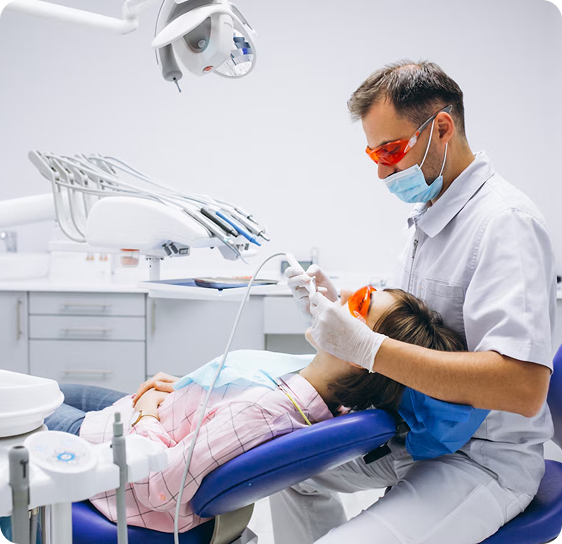
Inspire Dental dentist serving Mesquite, Garland, and Balch Springs TX

The dentists at Inspire Dental & Orthodontics are licensed Texas providers trained in clinical oral cancer detection. Dentists are often the first healthcare providers to identify suspicious lesions because patients visit their dentist more regularly than many other specialists. Our team performs thorough soft tissue exams at every routine visit and maintains detailed records of any findings to track changes over time. If a lesion requires further evaluation, we provide a prompt referral to an oral surgeon or specialist.

Oral cancer screenings are most effective when paired with consistent professional teeth cleanings every six months. For more information on oral cancer risk and prevention, visit the American Dental Association.

Why Patients Trust Inspire Dental & Orthodontics for Preventive Care

  • Over 2,700 five-star Google reviews across our Mesquite, Garland, and Balch Springs locations
  • All screenings performed by licensed Texas-credentialed dentists
  • Bilingual team (English and Spanish) serving the full DFW community
  • Medicaid, CHIP, and most PPO plans accepted at all three offices
  • Three convenient locations: Mesquite, Garland, and Balch Springs
  • Oral cancer screening included at every routine exam with no additional charge
5.0
★★★★★
2,700+ Google Reviews

What Our Patients Say About Preventive Care at Inspire Dental

Real reviews from patients at our Mesquite, Garland, and Balch Springs locations.

★★★★★

"I had no idea they checked for oral cancer at a regular cleaning. The dentist was thorough, explained exactly what she was looking for, and made me feel completely at ease. Really glad this is part of the routine visit and did not cost anything extra."

Thomas B. — Mesquite patient
Oral Cancer Screening Mesquite
★★★★★

"My dentist noticed a small white patch on my tongue I had not paid attention to. They referred me to a specialist right away who confirmed it was benign. That kind of attentiveness is exactly why I keep coming back here. Really thorough care."

Diane M. — Garland patient
Preventive Exam Garland
★★★★★

"Vine para una limpieza y el dentista hizo una revisión completa de cáncer oral sin costo adicional. Me explicaron todo en español y me hicieron sentir cómodo en todo momento. Es muy importante que hagan esto en cada visita. Muy profesionales."

Miguel A. — Balch Springs patient
Detección Temprana Balch Springs

Oral Cancer Screening FAQs

Is oral cancer screening painful?
+
No. Oral cancer screening is completely painless. Your dentist visually examines the tissues of your mouth, lips, and throat and gently palpates the neck and jaw to check for unusual lumps. The entire process takes just a few minutes and requires no special tools, needles, or anesthesia. It is simply a thorough extension of your regular dental exam.
How often should I be screened for oral cancer?
+
For most adults, an oral cancer screening at every routine dental exam, typically every six months, is sufficient. Patients with elevated risk factors such as tobacco use, heavy alcohol consumption, or a prior oral cancer diagnosis may benefit from more frequent monitoring. If you notice any unusual sores, patches, or changes in your mouth between exams, contact us promptly rather than waiting for your next scheduled visit.
What happens if something suspicious is found?
+
Finding something unusual during a screening does not automatically mean cancer. Many lesions are benign or caused by minor irritation from a rough tooth or denture. If your dentist identifies a suspicious area, the typical next step is a short observation period, often two weeks, to see if it resolves on its own. If it does not, a referral to an oral surgeon for a biopsy may be recommended. Early referral and diagnosis are always better than waiting.
Does Medicaid cover oral cancer screenings?
+
Oral cancer screening performed as part of a routine dental exam is generally covered under Medicaid dental benefits in Texas when the exam itself is covered. Because our screening is included in every routine visit at no extra charge, patients with Medicaid, CHIP, or PPO coverage who are eligible for a routine exam will have the screening covered as part of that visit. Our team will verify your benefits before your appointment.
Can I get oral cancer even if I do not smoke or drink?
+
Yes. While tobacco and alcohol are the most well-known risk factors, oral cancer also occurs in people with no history of either. HPV-related oropharyngeal cancers in particular are increasing among younger, non-smoking adults. Prolonged sun exposure, a weakened immune system, and genetic factors also contribute. This is one reason why annual screenings are recommended for all adults, not just those with traditional risk factors.
What is the difference between a canker sore and oral cancer?
+
Canker sores (aphthous ulcers) are common, small, painful ulcers that typically heal on their own within one to two weeks. They are not cancerous and are not caused by infection. Oral cancer lesions, by contrast, often do not heal, may be painless, can appear as red or white patches rather than just ulcers, and may be accompanied by other symptoms such as a lump, difficulty swallowing, or numbness. The key rule is straightforward: any sore or unusual patch in the mouth that has not healed within two weeks should be evaluated by a dentist.
Are oral cancer screenings at the dentist as effective as a specialist exam?
+
Routine dental screenings are highly effective at identifying suspicious lesions that warrant specialist evaluation. Dentists are uniquely positioned to detect early changes because they examine the entire oral cavity at regular intervals over many years and can track changes over time. When a dentist identifies something that needs further evaluation, they refer the patient to an oral and maxillofacial surgeon for a more detailed exam and, if needed, a biopsy. The dental screening does not replace a specialist workup but is the most common and accessible first line of detection.

Oral Cancer Screenings in Mesquite, Garland & Balch Springs

Inspire Dental & Orthodontics — Mesquite 909 Tripp Rd Ste 190, Mesquite, TX 75150
(972) 408-4003
Inspire Dental & Orthodontics — Garland 930 W Centerville Rd Ste A, Garland, TX 75041
(469) 329-1069
Inspire Dental & Orthodontics — Balch Springs 11203 Lake June Rd Ste 120, Balch Springs, TX 75180
(972) 752-6210

Effortless Online Booking for Your Dental Visit